Information About Homeopathy

You might think that ‘homeopathy’ and ‘home remedy’ are synonymous, but homeopathy is much more complex than just making an acne treatment out of lemon juice and baking soda in your kitchen.

It is an entire system of medicine that focuses on stimulating different parts of the body to treat itself, rather than relying on medicine to do the treating for a perfectly capable body.

The idea behind homeopathy is that something that causes symptoms is large doses can be used to treat that same problem when taken in smaller amounts.

Homeopathy also relies on a principle of “like with like,” meaning that something that causes one symptom can be used to treat those same symptoms.

One example of a medicine that follows homeopathic principles is Ritalin.

Children with Attention Deficit Hyperactivity Disorder, or ADHD, have problems with over-stimulation. Ritalin, which may be surprising, is actually a stimulant, which works to cancel out internal stimulation.

Homeopathic medicines are actually created by specialists who work to dilute medicines so that they are able to treat a problem without creating a toxic effect in the body.

History

A lot of people may view homeopathy as a “new-aged” for of medicine, but it actually is very old.

Dating back to Hippocrates, an ancient Grecian physician who many consider the founder of modern medicine (the Hippocratic Oath that doctors take is named after him), homeopathy has actually been used successfully for more than 200 years.

Interested Yet?

If you like the sound of homeopathy and are interested in visiting a homeopathy practitioner, you may be surprised at how many are practicing near you.

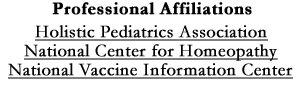
Visit the National Center for Homeopathy or The Society of Homeopaths for more information or for where you can find homeopathic resource centers!

Homeopathic Remedies for Chapped Lips

Homeopathic Remedies for Chapped LipsHaving chapped lips is a common problem, especially among people who live in cold or dry climates. Other causes of chapped lips include dehydration, lip biting, vitamin B2 deficiency, smoking, allergies, drugs, and colds.

Chapped lips are indicated by dry, cracked, and flaky sore lips. Chapped lips can also cause redness, sensitivity, peeling, and pain.

Chapped lips can cause embarrassment and pain.

People who have chapped lips are more perceptible to other problems as well. Some of these could include cold sores and bacterial infections.

Many people who have chapped lips turn to chap sticks and lip sticks to help deal with their problem. Although some of these products are useful, consumers should be aware that some of the chemicals found in these products can lead to infection, thus worsening your already chapped lips.

Natural Cures for Chapped Lips

There are so many different kinds of home remedies that people can use for chapped lips. Chances are, one of these solutions will help cure your chapped lips.

Olive Oil
Applying a thin layer of olive oil on your lips daily is a great way to get rid of chapped lips.

Toothbrush
While picking at your chapped lips can worsen them, using a soft tip toothbrush to remove the dead can help reduce the problem of chapped lips.

Rose Petals
Mixing crushed rose petals and a few drops of glycerin can cure your chapped lips. The rose petals will also restore color to your lips.

Aloe Vera
By daily putting a coat of Aloe Vera on your lips, you can say goodbye to your chapped lips.

Cucumbers
Rubbing slices of cucumbers on your chapped lips can instantly provide relief.

Water
Since dehydration is one of the causes of chapped lips, drinking lots of water can help prevent chapped lips. In addition, if you live in a dry environment, it may be helpful to sleep with a humidifier to restore moisture to your lips.

Coconut Oil
Applying a layer of coconut oil on your chapped lips is a delicious way to cure your chapped lips.

Honey
Honey is considered a great moisturizer, so applying honey to your lips will aid you in your recovery from chapped lips.

Vaseline
Vaseline is one of the best skin protectants you can use. By applying a thin layer of Vaseline to your lips on a regular basis, your chapped lips will go away.

Combination
Many people have reported that by combining both Honey and Vaseline, chapped lips will be cured.

Natural Remedies for Acne

Natural Remedies for Acne

Acne is a common problem among people all over the world. It is a problem that, unfortunately, usually cannot be hidden. Acne is one of the main reasons for teenage depression in the United States. It is unfortunate that acne lowers the self-esteem of those it plagues. Luckily, there are things that can be done to help prevent this embarrassing situation.

Preventative Care

While a lot of focus is put on how to stop acne once it’s occurred, it may be surprising to learn that a lot (although not all) acne can be prevented through behavioral changes.

Some of these include:

• Keep your hair and hair products off of your face. The oils from these products, and yes, even your hair, can get on your skin and cause your pores to clog. If you have lots of acne on your forehead, it may be due to bangs.
• Sleep on your back. The oils and dirt from your hair and face get onto your pillow. When you sleep on your stomach, your face is constantly touching these oils. It is important to wash your pillow case and sheets frequently.
• Keep your hands away from your face. Dirt and oils from your hands are transferred to your face when you rest your head on your chin, pick at your skin, etc. Also, wash your hands regularly.
• Don’t sleep with makeup on. This is the single easiest way to prevent acne. In addition, use oil free products, such as moisturizers and foundations.
• Eat healthy.
• Exercise.
• Manage your stress.

Home Remedies

Unfortunately, not everyone is good about making sure they prevent acne, or sometimes people do all they can and acne still pops up on their face.

Many people visit dermatologists and pay a lot of money for treatments that may not even work. However, there are lots of different home remedies for acne—and you probably won’t even need to leave your house for the products you’ll use.

Honey
While honey cannot prevent acne, it is widely known that honey can help someone deal with their acne. This also includes helping to get rid of acne scars. Honey helps because it reduces redness, is great for sensitive skin, is fairly inexpensive, and it cleanses your pores. In addition, it has other bonuses for your skin, such as making it glow and feel soft.

Natural Remedies for Acne There are lots of different recipes for a home honey-mask, but really all you need is honey. Apply a thin layer to your face. Let it dry for 20 minutes, and then wash with warm water.

Aloe Vera
Aloe Vera works great for spot treatment and helps diminish redness and swelling that acne can also cause. Aloe Vera will help moisturize your skin and brighten your complexion.

To use, apply Aloe Vera on the heavily affected area. It will then absorb into the skin.

Baking Soda
Baking soda can be used as a facial cleanser, which will help prevent acne. Baking soda will remove dirt and dead skin from your face, as well as clean out your pores.

To use, mix baking soda with water until it reaches a toothpaste-like consistency. Then rub in a circular motion all over for your face for at least one minute. Then wash with water and pat dry.

Toothpaste
Toothpaste, like honey, cannot prevent pimples from showing up. However, due to its’ high sodium concentrate, toothpaste is great for overnight or “emergency” spot treatment purposes. Toothpaste can dry out your pimple and reduce redness.

To use, spread a small portion of toothpaste on the affected area. Let it sit overnight, and then wash it off in the morning. As a warning, do not use toothpaste that contains tartar because the chemicals in it are too strong for facial skin.

Find What Works Best

There are lots of home remedies available for those who struggle with acne. Experiment with different ideas and find which works best for you.

Homeopathy for Alzheimer’s Disease

homeopathy for alzheimer'sAlzheimer’s Disease is cruel.  It is relentless. It is long. It is heartbreaking.

Several years ago, my grandmother was diagnosed with and eventually succumbed to Alzheimer’s Disease.  It started slowly.  She repeated questions over and over, often times within a few minutes of each other. Then she started forgetting important details such as where she lived and how many pills she had taken that morning.  Eventually, she forgot my name.

I hated watching the pain that would cross her face as she struggled to remember. Remember how to dress herself. Remember how to walk.  Remember how eat.  As the disease took hold of her mind, she ultimately forgot all of those things and had to depend on her family to survive.

After years of struggle, it was almost a relief to watch her pass away quietly in the hospital. No struggle. No pain.

Yet during the years of heartache, I sometimes wish I could have done more to help her retain her memories.  Unfortunately there is no cure for the disease, and most studies simply suggest keeping the mind active to slow the degenerative process.

However, there might be hope.

Homeopathic Treatments of Alzheimer’s may be the key to unlocking an effective treatment.

Homeopathy is based on the idea that if a specific substance taken in large amounts will cause disease, then that same substance taken in small amounts will cure it. Similar to a vaccination, homeopathic treatments involve exposing the body in order to protect it.

Of course, different chemicals effect different people, and my grandma had been in such a late stage of Alzheimer’s that even experimental treatments wouldn’t have helped her.

Yet for those still struggling to remember, still fighting the battle, the remedy <i>alumina</i>, discovered back in 1829 by Dr. Hahnemann, was found to be highly effective I treating “Great weakens or loss of memory” in cases where “consciousness of personal identity is confused.”

Homeopathic concentrations of Aluminum oxide were said to cure symptoms of dementia, and interestingly, more modern has shown an association between high levels of aluminum and Alzheimer’s Disease.  Although the belief that an excess of aluminum causes Alzheimer’s has not been proven, new therapies and treatments are being developed which will ultimately halt the disease completely.

Until that time, possible homeopathic remedies would include the following:

Sage oil
British Scientists believe that sag oil inhibits the action of acetylcholinesterase, the enzyme that breaks down acetylcholine.  Those with Alzheimer’s Disease have often reported having low levels of acetylcholine.

Bio-Strath
Bio-Strath is an herbal supplement that has been highly effective in treating the earlier stages of Alzheimer’s Disease. Biostrath makes improvements in concentration, as well as general health and resistance.

Ginkgo Biloba
This plant is believed to be a highly effective memory and concentration enhancer. It is the most prescribed medicine in Germany used to correct cerebral insufficiency.

Hopefully with any luck, a few of these remedies may help your loved one overcome such an emotionally painful disease.

Bach Flower Remedies

Bach flower remedies are homeopathic dilutions of flower material developed by Edward Bach, an English homeopath, in the 1930s. Bach believed that dew found on flower petals retain healing properties of that plant. The remedies are intended primarily for emotional and spiritual conditions, including but not limited to depression, anxiety, insomnia and stress.

The remedies contain a very small amount of flower material in a 8:7 solution of brandy and water. Because the remedies are extremely diluted they do not have a characteristic scent or taste of the plant. Vendors claim that the remedies contain “energetic” or “vibrational” nature of the flower and that this can be transmitted to the user. Bach flower remedies are labeled as homeopathic because they are extremely diluted in water, are considered vibrational medicines, and they rely on a concept of water memory. Yet Bach Flower remedies do not follow other homeopathic precepts such as the law of similars or the belief that curative powers are enhanced by shaking and repeated diluting (“succession”).

Philosophy Behind Bach Flower Remedies

Bach thought of illness as the result of “a contradiction between the purposes of the soul and the personality’s point of view.” This internal war, according to Bach, leads to negative moods and energy blocking, which causes a lack of “harmony,” thus leading to physical diseases.

Rather than being based on research using the scientific method, Bach’s flower remedies were intuitively derived and based on his perceived psychic connections to the plants. If Bach felt a negative emotion, he would hold his hand over different plants, and if one alleviated the emotion, he would ascribe the power to heal that emotional problem to that plant. He believed that early morning sunlight passing through dew-drops on flower petals transferred the healing power of the flower onto the water, so he would collect the dew drops from the plants and preserve the dew with an equal amount of brandy to produce a mother tincture which would be further diluted before use. Later, he found that the amount of dew he could collect was not sufficient, so he would suspend flowers in spring water and allow the sun’s rays to pass through them.

Bach advertised his remedies in two daily newspapers, but since his practices did not follow any scientific protocol, and his methods and claims were unproven, the General Medical Council disapproved of his advertising. For example, in his treatise Heal Thyself he wrote:

“Disease will never be cured or eradicated by present materialistic methods, for the simple reason that disease in its origin is not material . . . Disease is in essence the result of conflict between the Soul and Mind and will never be eradicated except by spiritual and mental effort.”

Homeopathy Medicine: Pulsatilla

Pulsatilla is prepared from the windflower or the pasque flower plant. The flowers generally appear around Easter hence the name pasque derived from “Pasch.” The treatment with pulsatilla has been around since Greek times when it was used for “Tearfulness.” In 1805, Hahnemann  proved that pulsatilla is an effective remedy for an assortment of disorders that vary from colds and coughs to digestive and gynecological complaints. Since then homeopaths have frequently used this medicine to treat other conditions, such asindigestion, diarrhea, measles, functional nervous affections, rheumatic pains, catarrh of different body parts, including ears, eyes, nose, respiratory tract and even the vagina, and other conditions.


One very important condition that indicates treatment with Pulsatillia is Sinusitis. So besides it’s use as a remedy for women’s health conditions, the homeopathic medicine pulsatilla is also prescribed to cure sinusitis which often manifests as headaches, watery eyes and catarrh. Sinuses can be very painful if touched. Agonizing pain in the face can be accompanied by an intolerable tenderness. The treatment is most effective when the patient has a watery release from the eyes along with the reduced breathing capacity.
It is said Pulsatilla works best for people who have a sweet and gentle nature and are accommodating. So there are certain character and personality types who benefit most from the use of the plant.
It will be well worth your while to check out this plant and it’s uses on the internet. I always recommend we do some research and seek the best possible professional advice. Take responsibility for your own well-being after all it is your life and the quality of it is often dependent on decisions you make.

Homeopathic Knowledge

It is no secret that Modern Medicine practice is in opposition to the knowledge that homeopaths have been developing for centuries. Indeed the acceptance of the treatment of health issues by homeopathic methods gained popularity due to the limited effects of other medical practices in the past. Scientific methods have increased knowledge in modern times and have given great diagnostic tools and successful surgical procedures.  But how do you learn about the proper use of alternative medicine when so many in the medical profession are in denial? Educate yourself. That’s the answer. Read informative books and study it out in your own mind. Seek good advice from those that know what homeopathic medicine can achieve.

Here is a starter.

Homeopathy Beyond Flat Earth Medicine by Timothy Dooley ND MD.
Version 2. With a well written new introduction.

And here is a more specialized book.

Ritalin Free Kids- Safe & Effective Homeopathic Medicine for ADD and Other Behavioral and Learning Problems by Judyth Reicenberg-Ullman ND MSW and Robert Ullman ND
Great guide to using homeopathy for children with ADD and ADHD.

The internet is a great place to search for answers, but search for some good books that will reinforce your commitment to taking control of your health maintenance choices.

If you are going to get really serious about studying homeopathy and may want to practise professionally a good place to consider is the British based College of Practical Homepathy. Visit their website.

http://www.college-of-practical-homeopathy.com/

The College of Practical Homeopathy (UK) Ltd, located in North London, and is the leading provider of high quality full and part time courses in Homeopathy as well as postgraduate courses and seminars on Homeopathy and other complementary medicines.


Ellen Kramer (MCPH) author of “A Practical Guide to Methods of Homeopathic Prescribing.”

Ellen Kramer  MCPH is Director and Course Manager for the College of Practical Homeopathy. Her book is a very competent exploration of some of the better tested methods in clinical use by homeopaths as well as a good introduction to homeopathy. It is an excellent source for homeopaths, students of homeopathy and other complementary and alternative practitioners to expand their understanding of homeopathy and an extremely useful review and developmental tool for practicing homeopaths.

Homeopathic Medicine Introduction

Homeopathy: An Introduction

Homeopathy, also known as homeopathic medicine is a whole medical system that was developed in Germany more than 200 years ago and has been practiced in the United States since the early 19th century. Homeopathy is used for wellness and prevention and to treat many diseases and conditions. This fact sheet provides a general overview of homeopathy and suggests sources for additional information.

Key Points

  • The principle of similars (or “like cures like”) is a central homeopathic principle. The principle states that a disease can be cured by a substance that produces similar symptoms in healthy people.
  • Most analyses have concluded that there is little evidence to support homeopathy as an effective treatment for any specific condition; although, some studies have reported positive findings.
  • There are challenges in studying homeopathy and controversies regarding the field. This is largely because a number of its key concepts are not consistent with the current understanding of science, particularly chemistry and physics.
  • There is limited research on the safety of homeopathic treatments.
  • Tell your health care providers about any complementary and alternative practices you use. Give them a full picture of all you do to manage your health. This will help ensure coordinated and safe care.

Overview

The term homeopathy comes from the Greek words homeo, meaning similar, and pathos, meaning suffering or disease. Homeopathy seeks to stimulate the body’s ability to heal itself by giving very small doses of highly diluted substances. This therapeutic method was developed by German physician Samuel Christian Hahnemann at the end of the 18th century. Hahnemann articulated two main principles:

  • The principle of similars (or “like cures like”) states that a disease can be cured by a substance that produces similar symptoms in healthy people. This idea, which can be traced back to Hippocrates, was further developed by Hahnemann after he repeatedly ingested cinchona bark, a popular treatment for malaria, and found that he developed the symptoms of the disease. Hahnemann theorized that if a substance could cause disease symptoms in a healthy person, small amounts could cure a sick person who had similar symptoms.
  • The principle of dilutions (or “law of minimum dose”) states that the lower the dose of the medication, the greater its effectiveness. In homeopathy, substances are diluted in a stepwise fashion and shaken vigorously between each dilution. This process, referred to as “potentization,” is believed to transmit some form of information or energy from the original substance to the final diluted remedy. Most homeopathic remedies are so dilute that no molecules of the healing substance remain; however, in homeopathy, it is believed that the substance has left its imprint or “essence,” which stimulates the body to heal itself (this theory is called the “memory of water”).

Homeopaths treat people based on genetic and personal health history, body type, and current physical, emotional, and mental symptoms. Patient visits tend to be lengthy. Treatments are “individualized” or tailored to each person—it is not uncommon for different people with the same condition to receive different treatments.

Homeopathic remedies are derived from natural substances that come from plants, minerals, or animals. Common remedies include red onion, arnica (mountain herb), and stinging nettle plant.


The Nuvilex company has a product you may well want to check on. Their Reme-Flu medicine is formulated as two individual steps. The first step is a homeopathic formula used to treat general flu symptoms and is a single-lingual tablet. Step 2 focuses on the symptoms associated with the respiratory system and is delivered in a sub-lingual liquid form. The unique homeopathic medicine is for preventing and treating the symptoms of fever, aches, Rhinorrhea, and coughing. Reme-Flu is manufactured and marketed by Legacy Biotechnologies, Inc. using Nuvilex intellectual property.


Alternative medicine

According to official sources (The CDC-Center for Disease Control) somewhere around 50 million Americans suffer from some form of Arthritis, a crippling disease.

Most use medicines approved by Medical Professionals in seeking relief from pain, but there is more evidence showing the benefits of a holistic approach using homeopathic methods. There has been a double-blind exploratory trial using random placebo controls to check the benefits of homeopathic care for patients with active rheumatoid arthritis who had previously used conventional therapy.

“The findings confirm previous work demonstrating that therapeutic benefits do arise from processes within the homeopathic consultation involving communication skills, empathy, hopefulness, enablement and narrative competence. The homeopathic consultation necessitates a very detailed understanding of the patient and is a unique and personalized approach.” Further studies are required to investigate the specific beneficial elements inherent in the homeopathic consultation, which could be employed by other clinicians to maximize patient benefit.

The  basic details of the report on the trial is reproduced below

Introduction
Rheumatoid arthritis is a chronic inflammatory disease affecting multiple joints in the body with a worldwide prevalence of 1 percent. Homeopathy is a complementary and alternative medical intervention practiced for different medical conditions including rheumatoid arthritis. Studies have shown mixed effects on the clinical benefits of homeopathy in rheumatoid arthritis. There is also evidence of the therapeutic benefits gained from the homeopathic consultation process. “Homeopathy consultations involve a complete exploration of the patient’s emotional, spiritual and physical well-being to enable treatment of the whole person, not just the illness,” per the researchers. The authors therefore tried to identify and explore whether benefits in rheumatoid arthritis are attributable to the homeopathic remedy, the homeopathic consultation or both.

Methodology
•    Patients with an active but stable condition of rheumatoid arthritis taking their conventional medication were randomized into different groups.
•    In one group, the patients received treatment (homeopathic remedies) including consultation; in the other, patients received treatment without consultation.
•    The patients received either both remedies and consultation or remedies only, for a period of 24 weeks, and then the patients in both groups were followed up until week 40.
•    The clinical benefits were assessed by a variety of validated standard scales used to measure patient outcome in arthritis either weekly or monthly.

Key findings
•    Homeopathic consultation with remedies statistically showed significant clinical benefits by an improvement in the measurement of certain scales only, compared to those not receiving a consultation.
•    Homeopathic consultation showed a marked improvement in disease outcome scales, pain assessment scores, patient global assessments and negative moods.
•    Those patients receiving homeopathic consultation reported meaningfully higher scores at the first consultation for enablement and empathy, compared to those receiving no consultation.

Shortcomings
Under-recruitment and a high drop-out rate led to the decrease in patient counts, not allowing for proper assessment of certain disease outcome scales. Moreover, no standardized scale or tool was available for monitoring clinical activity in rheumatoid arthritis when adjunctive treatments were employed with standard treatment. Therefore, modest changes in response to the adjunctive treatment could have been observed. Also, numerous subjective scales were used in the study for assessment which can vary among individuals, and proper interpretation of such data would require multiple studies in the future using the same scales.

Conclusion
This study performed in three UK hospitals identified the benefits patients receive due to homeopathic consultation, significantly improving standard objective markers of rheumatoid arthritis. Homeopathic remedies without consultation proved to have a less effective result than treatment including the consultation process.  “The findings confirm previous work demonstrating that therapeutic benefits do arise from processes within the homeopathic consultation involving communication skills, empathy, hopefulness, enablement and narrative competence. The homeopathic consultation necessitates a very detailed understanding of the patient and is a unique and personalized approach.” Further studies are required to investigate the specific beneficial elements inherent in the homeopathic consultation, which could be employed by other clinicians to maximize patient benefit.

Read more at FYI Living at fyiliving.com

Homeopathic Remedies

Here we are in the Allergy season, if it has not already arrived in your locale. And what can Homeopathic medicine do for you?

Homeopath practitioners have considered remedies for allergy sufferers and those specifically afflicted by allergic rhinitis. The professional homeopath will take a look at a patient’s physical, emotional, and psychological state before prescribing a remedy. The most appropriate treatment for each individual will be assessed on the holistic approach and the most appropriate treatment for the patient will be prescribed from the knowledge and experience of the practitioner.

There is an allergy treatment for frequent sneezing, a lot of irritating nasal discharge and tearing eyes that is developed from Allium Cepa (raw onion) and eyebright or Euphrasia is used to treat nasal discharge, with attendant stinging, and tear producing eye irritation.

Nux vomica (poison nut) may be used for allergy treatment for stuffiness which can accompany nasal discharge, ticklishness, watery nasal discharge and a lot of sneezing.

Arsenicum album (trioxide of arsenic) can be the required treatment for alleviation of stuffiness with burning nasal discharge and violent sneezing.

Then there are some simple treatments such as a saline nasal rinse, cool-mist humidifiers, air filters with HEPA filters steam inhalation, probiotics, honey, quercetin (which is found in the skin of onions and apples and acts as a natural antihistamine,) and stinging nettle leaf tea.

Do a little research yourself and seek the best homeopathic practitioners and prepare to enjoy the coming months.